The Fabric of Civilization: How Textiles Made the World
Goodreads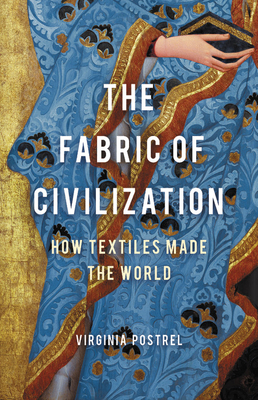
Virginia Postrel
visão geral
From Neanderthal string to 3D knitting, an “expansive” global history that highlights “how textiles truly changed the world” ( Wall Street Journal ) The story of humanity is the story of textiles—as old as civilization itself. Since the first thread was spun, the need for textiles has driven technology, business, politics, and culture.
In The Fabric of Civilization , Virginia Postrel synthesizes groundbreaking research from archaeology, economics, and science to reveal a surprising history. From Minoans exporting wool colored with precious purple dye to Egypt, to Romans arrayed in costly Chinese silk, the cloth trade paved the crossroads of the ancient world. Textiles funded the Renaissance and the Mughal Empire; they gave us banks and bookkeeping, Michelangelo’s David and the Taj Mahal. The cloth business spread the alphabet and arithmetic, propelled chemical research, and taught people to think in binary code.
Assiduously researched and deftly narrated, The Fabric of Civilization tells the story of the world’s most influential commodity.
“We are taken on a journey as epic, and varying, as the Silk Road itself.… [ The Fabric of Civilization is ] like a swatch of a Florentine Renaissance brocade: carefully woven, the technique precise, the colors a mix of shade and shine and an accurate representation of the whole cloth."
— New York Times
“Textile-making hasn’t gotten enough credit for its own sophistication, and for all the ways it undergirds human technological innovation—an error Virginia Postrel’s erudite and complete book goes a long way toward correcting at last.”
— Wired